We set out from Jujuy toward the province of Salta; the first stop on our journey is the town of Cachí.
To get there, from Salta we take Route 68 southward through the province until we reach the town of El Carril. Just a few meters from there, Provincial Route 33 appears, leading us to the Quebrada del Escoipe, a wonderful spot from which to begin exploring one of the most picturesque corners of Salta.
The road winds through almost jungle-like vegetation.
After traveling 80 km, the landscape changes dramatically; the arid terrain gives way to the jungle, and we begin to climb to an altitude of nearly 2,000 meters above sea level.
- La Cuesta del Obispo
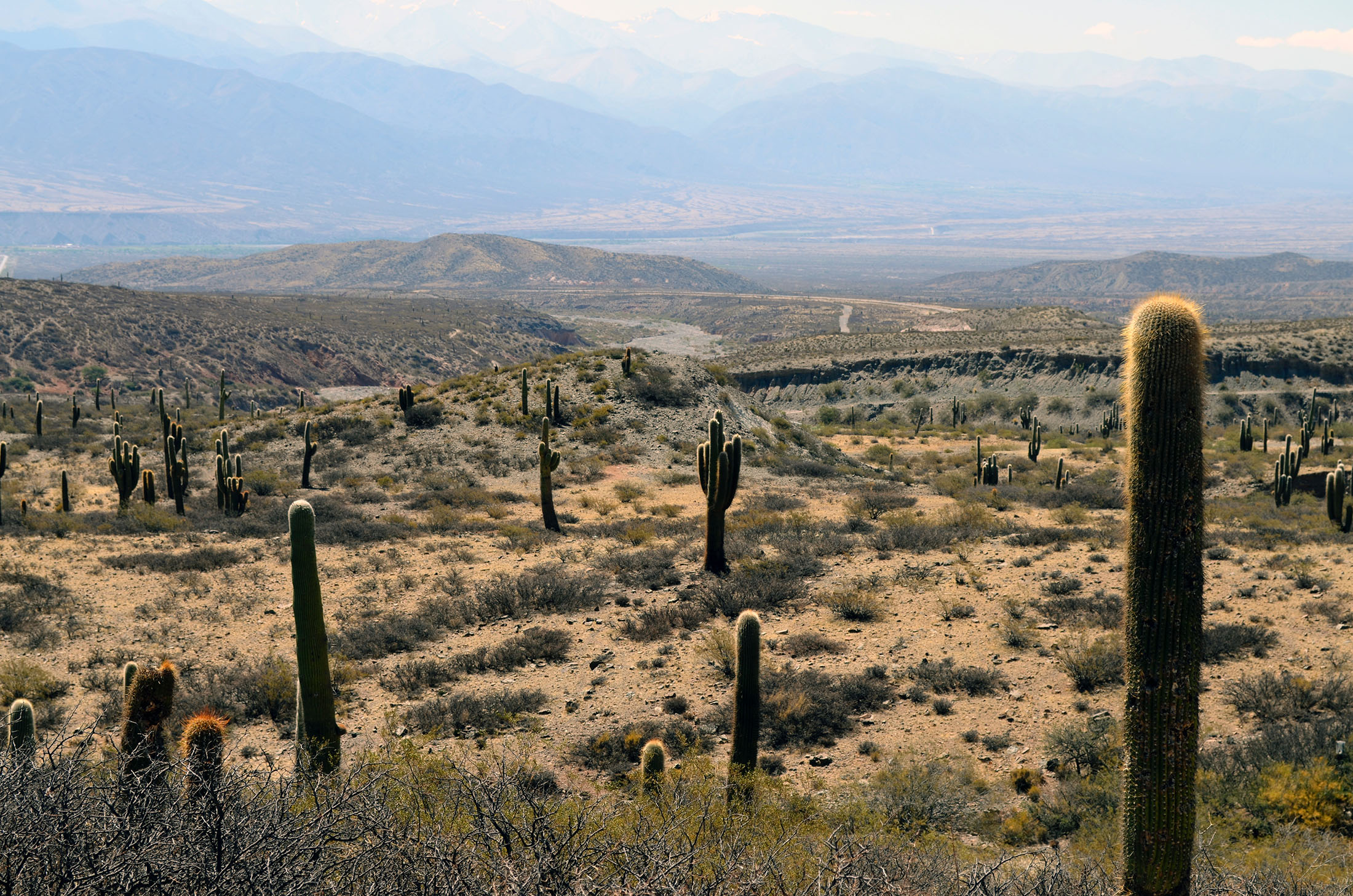
It is a true paradise where you can appreciate the twists and turns of the road, the curves and counter-curves necessary to climb the mountain. The mountains are tinged with green, brown, and gray and begin to reveal the aridity of the puna that will appear in the coming kilometers.
- La Recta del Tin Tin
It is a perfect straight stretch that crosses Los Cardones National Park, with a small hill called “Tin Tin” on the left and Cerro Negro on the right. There, you can spot dozens of animals, including vicuñas, deer, and condors. After 20 km, we arrive at the beautiful town of Cachí.
Cachí
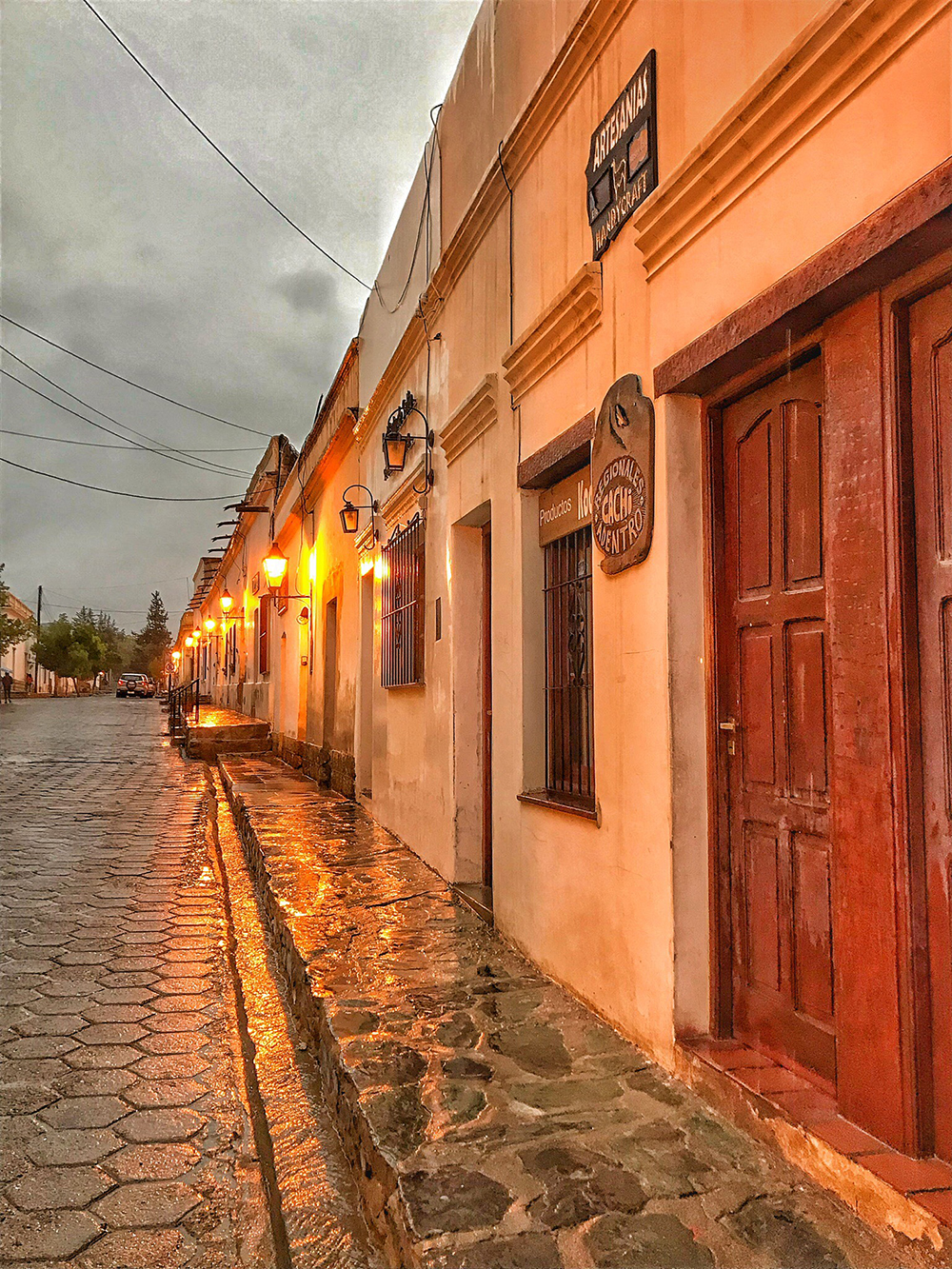
Located 157 km from Salta City, this is a beautiful town situated at 2,280 meters above sea level on the slopes of the snow-capped Cachi Mountain. Its late 18th-century colonial architecture is truly admirable.
There, you can visit the 18th-century parish church and the Anthropological Museum, the artisan market, and the cemetery, which is located on a hilltop offering a beautiful view of the town, among other attractions.
Where to Eat in Cachí
We can’t fail to mention Viracocha Restaurant, which offers excellent food and service.
High-altitude wines, traditional dishes, and a very charming spot
Where to Stay in Cachí
Hostal de las Tinajas
This hostel is simple and affordable, but it has an excellent location, is super clean, and has a parking lot. Here’s the link in case you’d like to book
https://www.booking.com/hotel/ar/hostal-las-tinajas-de-cachi.en.html?aid=1733018
From there, we had the option of heading down to Cafayate via Route 40, but we decided to return to Salta to the Cabra Corral Dam, and then continue along La Quebrada de las Conchas toward Cafayate.
- Cabra Corral Dam
It is located 85 km from Salta City, where you can enjoy various activities such as fishing, sports, and bungee jumping—ideal for spending the day. We were there from early morning until the afternoon, when we set off for Cafayate via La Quebrada de las Conchas.
Halfway there, you reach a town called Alemanía, located 107 kilometers from Salta City.
Alemanía is worth a stop to see what remains of those days when the air was thick with gold and railroads. From this small town begins a visual paradise of its own, with the Calchaquí Valleys as its main stars.
- Quebrada de Las Conchas
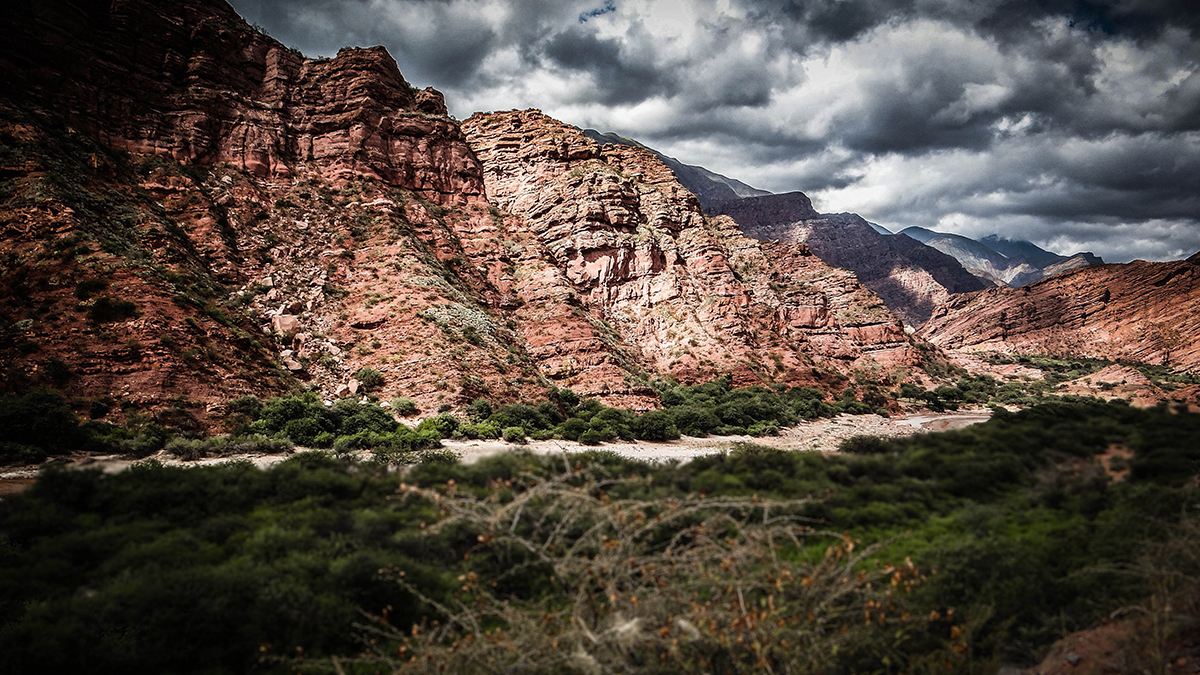
The Quebrada del Río Las Conchas begins to reveal the traces left by the wind, eroding and shaping mountains of unique colors as if they were malleable sheets of paper.
As a result of erosion, multicolored hills and strange rock formations abound within a landscape of immense beauty.
The Quebrada de las Conchas is a provincial nature reserve located between the cities of Salta and Cafayate. It is also known as the Quebrada de Cafayate. The descent of the Las Conchas River from the Andes sculpted this valley approximately two million years ago. The action of erosion exposed the sedimentary layers of the rock, endowing the mountains of the gorge with a unique multicolored beauty. But the beautiful landscape is not the only attraction; the passage of water and wind also left curious natural formations that have been given names:
-
Garganta del Diablo—the result of an ancient waterfall that carved a large hole in the rock.
-
The Amphitheater—another large hole in the rock carved by water.
-
El Obelisco—a large stone tower rising solitary from the ground
-
The Monk
-
The Toad - a giant rock resembling a frog
-
Las Ventanas - a rock wall dotted with small holes
-
The Castles—large stone columns jutting out of a rocky hill
Each is marked from the road. Seven kilometers north of Cafayate lies Los Médanos.
National Route 68 winds its way through the center of the Quebrada de las Conchas, hugging the river. The most interesting sections begin a few kilometers north of Cafayate, and the gorge ends about 100 kilometers south of Salta, where the landscape changes abruptly from the dry, arid Calchaquí Valleys to the subtropical greenery of the Lerma Valley.
The Cafayate Gorge was declared a provincial nature reserve in 1995, and in addition to its scenic value, it is the site of major paleontological discoveries, including fish fossils and dinosaur tracks. A branch of the ancient Inca Trail also passes through this valley.
Cafayate
Cafayate is a town in the Calchaquí Valleys located in the southwest of the province of Salta.
Crossed by National Route 40, Cafayate and its surroundings are famous for their vineyards, excellent wines, and wineries where Torrontés grapes are grown.
It is the most important city within the Calchaquí Valleys tourist circuit.
It still retains the characteristics of its colonial architecture—its streets, its church. A particular attraction is the corn mill built by the Jesuits in the 18th century.
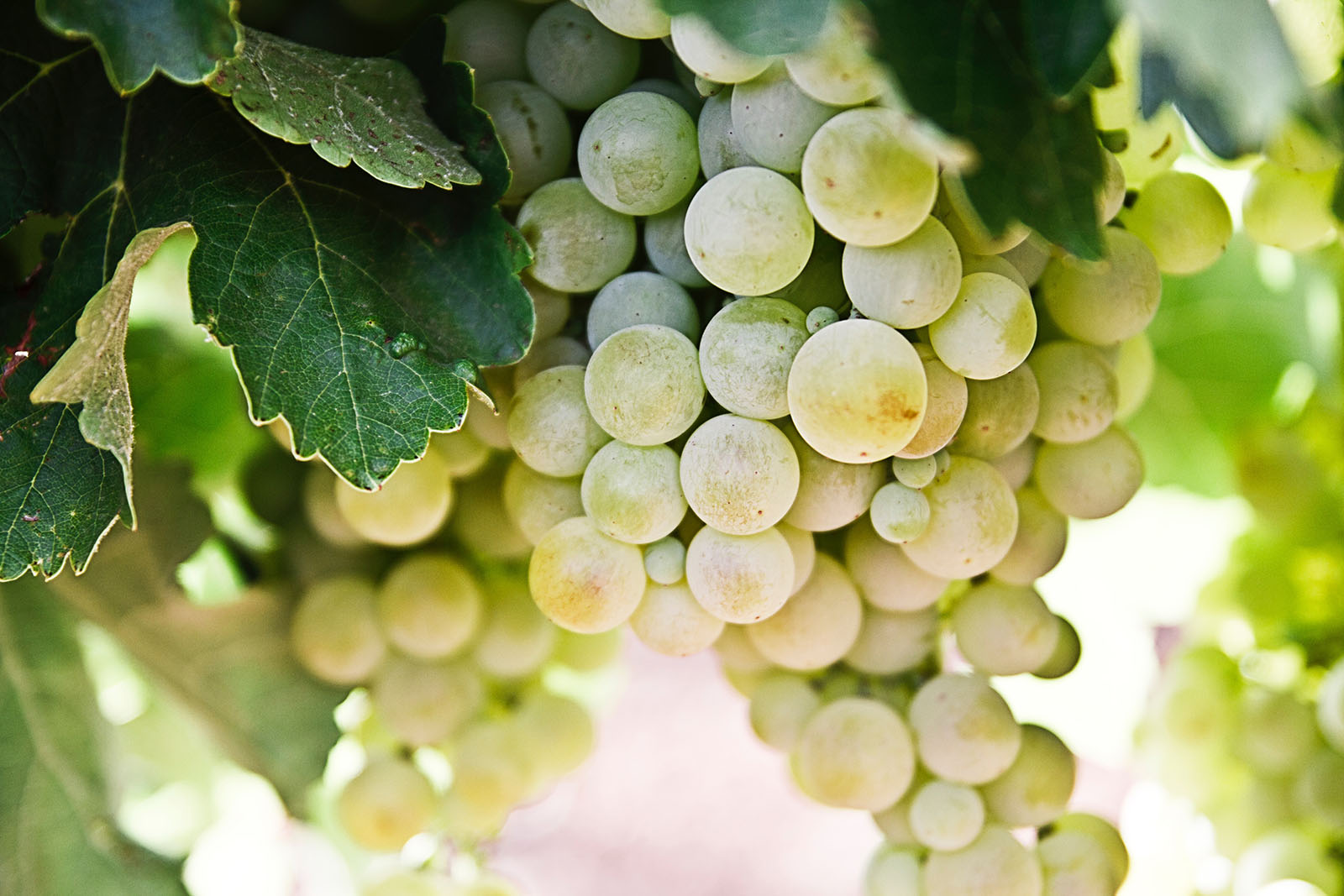
As part of the Wine Route, we decided to visit two wineries: the well-known Bodega Piatelli, and a smaller, family-run one, “Finca las Nubes.”
- Bodega Piatelli
It is located about 15 minutes from Cafayate, and from up there you can see the city. Architecturally, it is beautiful.
It is open every day of the year, except December 25 and January 1, from 9 a.m. to 7 p.m. In the morning, the focus is on tourist activities. There are tastings, picnics in the winery’s gardens, bike rides, horseback riding, and board games, among other activities. The restaurant opens at noon for lunch until 4 p.m. Then there are tapas and early dinners until 7 p.m., and for more formal dinners, it is also open for groups of at least 20 people.
Tours with tastings are paid.
- Finca las Nubes
At the foot of Cerro El Cajón, 5 km from Cafayate, lies Finca Las Nubes, an exceptional setting surrounded by carob trees, cardon cacti, terraces, and ancient ruins, where José Luis Mounier’s vineyards are located.
Located at an elevation of over 1,850 meters above sea level, a generic wine—a blend of varietals—is produced, the result of the estate’s daring vineyards, which wind their way through the terraced fields that once belonged to the Diaguitas of the Calchaquí region.
To reach the estate, starting from the Central Plaza on Ntra. Sra. del Rosario Street heading south, travel three blocks to 25 de Mayo Avenue, turn right, and begin climbing the slopes of Cerro El Cajón.
You can get there by private vehicle, mountain bike, or on an easy hike along the improved gravel road; the landscapes of Cafayate surrounding this region are well worth exploring.
Along the way, you’ll pass an old mansion dating back to 1860 that belongs to the San Isidro ranch, one of the few remaining relics of old Cafayate. In the distance, you can make out its Italian-style architecture.
Further on, you’ll find the entrance to the Divisadero Ruins and the Cueva del Suri, where you can see a cave painting of the symbolic little ostrich.
There, you can take guided tours with tastings, and if you buy a bottle, the tour is free.
You can have a delicious lunch there—we highly recommend it!!!
After resting a few days in Cafayate, we set off for Tafí del Valle, where we’ll first stop at the Ruins of Los Quilmes.
- Los Quilmes Ruins - Tucumán
The Los Quilmes Ruins are located in the Calchaquí Valley within Tucumán.
This valley preserves the valuable remains of the fierce Calchaquí culture. The landscape of the Quilmes Mountains to the west and the Calchaquí Range to the east give the wide valley its own unique and unmistakable identity. A gravel road heading toward the western hills will take you, after 5 km, to the foot of Cerro Alto del Rey, where the venerable citadel of the Quilmes Indians is located, at nearly 2,000 meters above sea level.
The Quilmes ruins are one of the most important pre-Hispanic settlements in Argentina. It was inhabited as early as 800 AD.
There we paid an entrance fee equivalent to $100 per person, which included admission to the museum and a guide.
Tafí del Valle - Tucumán
Tafí del Valle is an excellent option for enjoying interesting excursions rich in history and scenery, with hikes through high hills, valleys, and various water sources.It is located 107 km from the city of San Miguel de Tucumán, at an elevation of 2,000 meters above sea level.
As for recommended activities, the summer resort town of El Mollar, just 15 km from Tafí del Valle, stands out as a favorite among young people for its nightlife. The La Angostura Dam is also a great destination.
Just 58 km away is Amaicha del Valle, a community that still preserves the most important features of Diaguita culture.
Where to Eat in Tafí del Valle
A great option for lunch or dinner is El Rancho de Felix, which serves traditional, regional dishes.
Follow our travels on social media!!!