When people think of Italian islands, they think of glamorous islands like Capri, near the Amalfi Coast, and then there’s Sardinia and Sicily. While all of Italy’s islands are stunning, we especially love the smaller ones that are largely unknown outside of Italy.
Literally, dozens of islands dot the seas off Italy’s coasts, and each has its own charm. Some may be perfect for hiking or diving, while others are just as elegant as Capri, but much less crowded. In this post, we’re going to tell you about the best Italian islands you probably haven’t heard much about.
Ponza
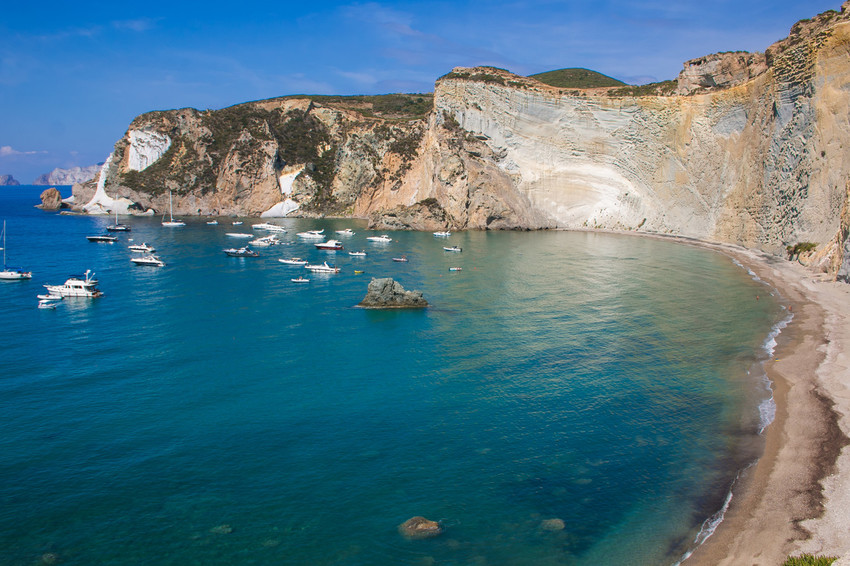
Ponza, located off the west coast of central Italy, welcomes many summer vacationers from Rome. Despite being packed with Italians during the warmer months, Ponza sees few foreigners. Its two main towns are the port of Ponza, with its colorful pastel-hued buildings, and La Pianna, a village perched on a ridge overlooking the water.
You can reach the beaches near the port on foot, walking through the ancient Roman tunnels still in use today, but a better option is to take the ferry to picturesque coves like Spiaggia Di Frontone.
One of the most appealing things about Ponza is its selection of stunning beaches, and there are some truly beautiful ones to choose from. The most popular beach is Chiaia di Luna, a pale sand beach shaped like a crescent, framed by imposing cream-colored rocky cliffs and lapped by aquamarine waters.
Tavolara
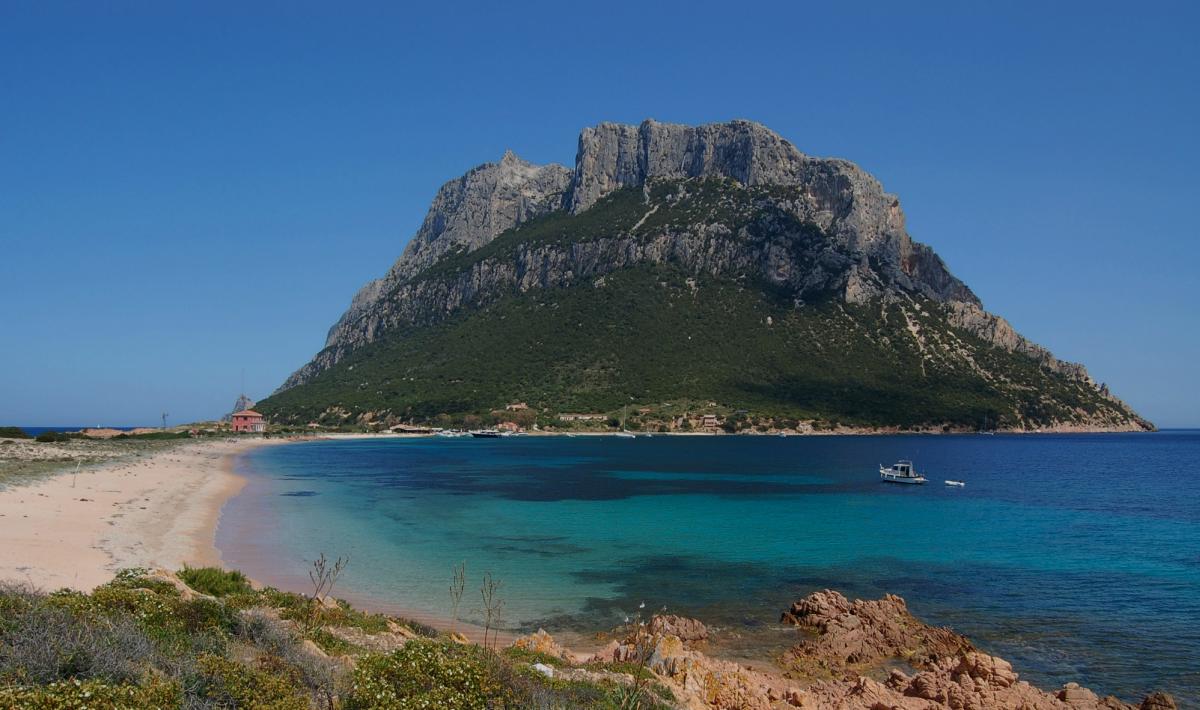
This three-mile-long strip of land, right off the northwest coast of Sardinia and accessible by ferry, is the most unusual island on this list. It proclaimed itself a kingdom in the late 19th century and was recognized as such by the former King of Sardinia. But even members of the “royal” family couldn’t agree on whether the so-called smallest kingdom in the world should remain one, as one of them left Tavolara to move to Italy after his death in 1934.
Tavolara, which has only a few full-time residents, is a paradise for divers.
Aeolian Islands
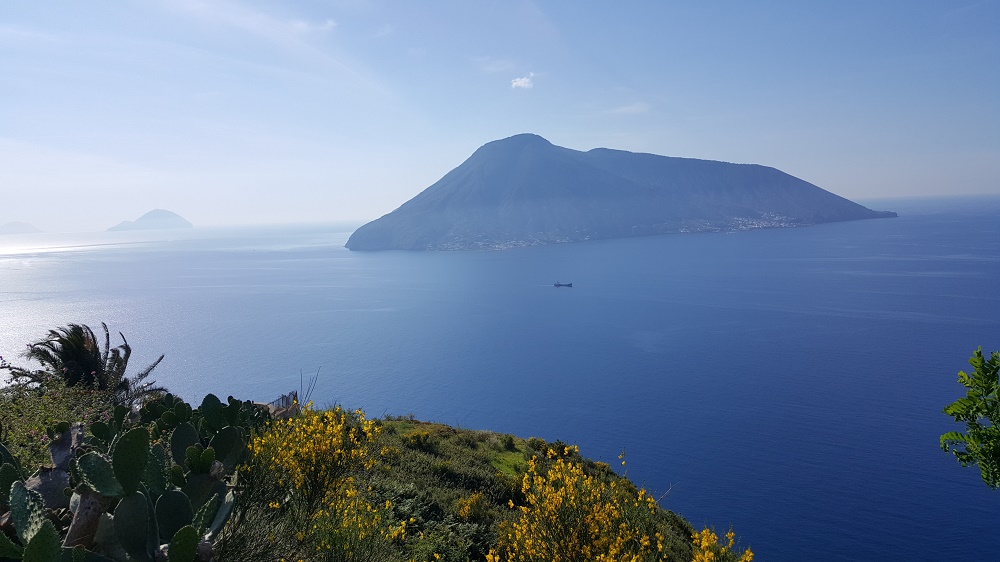
Some consider these seven islands off the northeast coast of Sicily to be the most beautiful of all the Italian islands. They range from the arid island of Panarea to the verdant island of Salina. There’s also Vulcano, where you can walk alongside a crater that still spews sulfurous gases, or Stromboli, which is actually a terrifying conical volcano rising from the sea. Guided hikes take you close to the summit of Stromboli, one of Italy’s three active volcanoes; as the sun sets, you can watch it spew its red lava into the night sky.
Panarea, the second-smallest island, is also the most elegant, attracting mega-yachts to its shores. Cars aren’t allowed here, which is a good thing, but beyond hiking along trails to its pristine beaches, there isn’t much to do. We recommend Salina, where the volcano has been dormant for a long time, and there are small farms, vineyards, and green forests. It has the most accommodation options and several excellent restaurants where you can savor Sicilian-inspired dishes.
Magdalena Islands
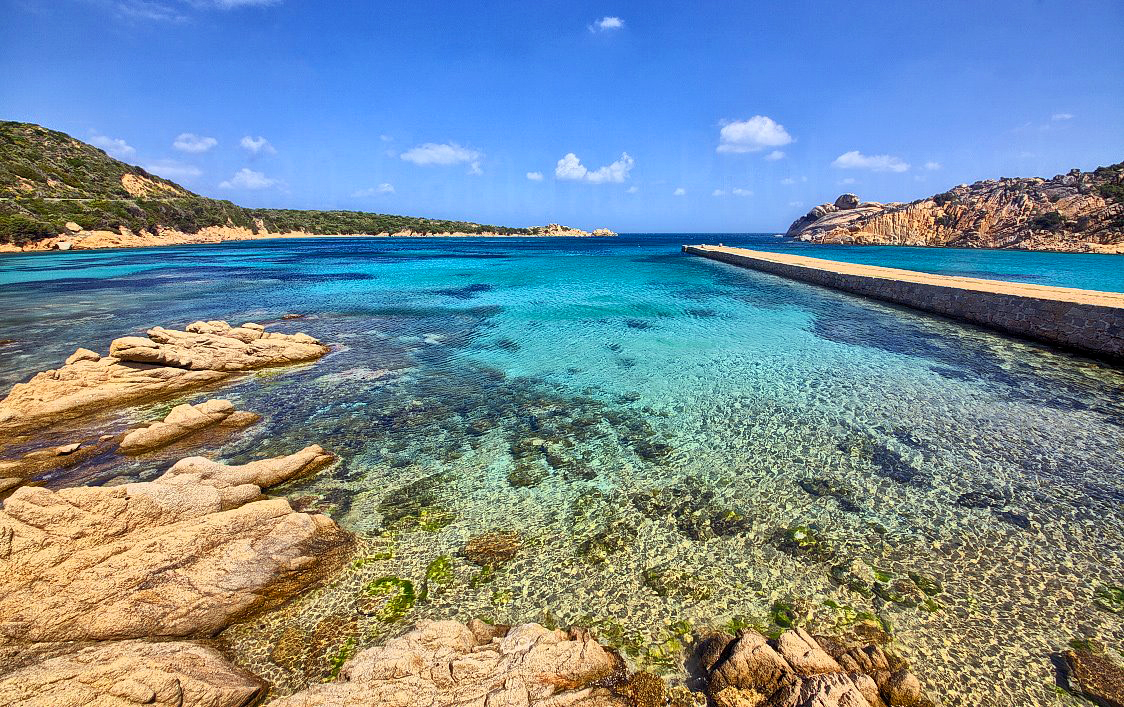
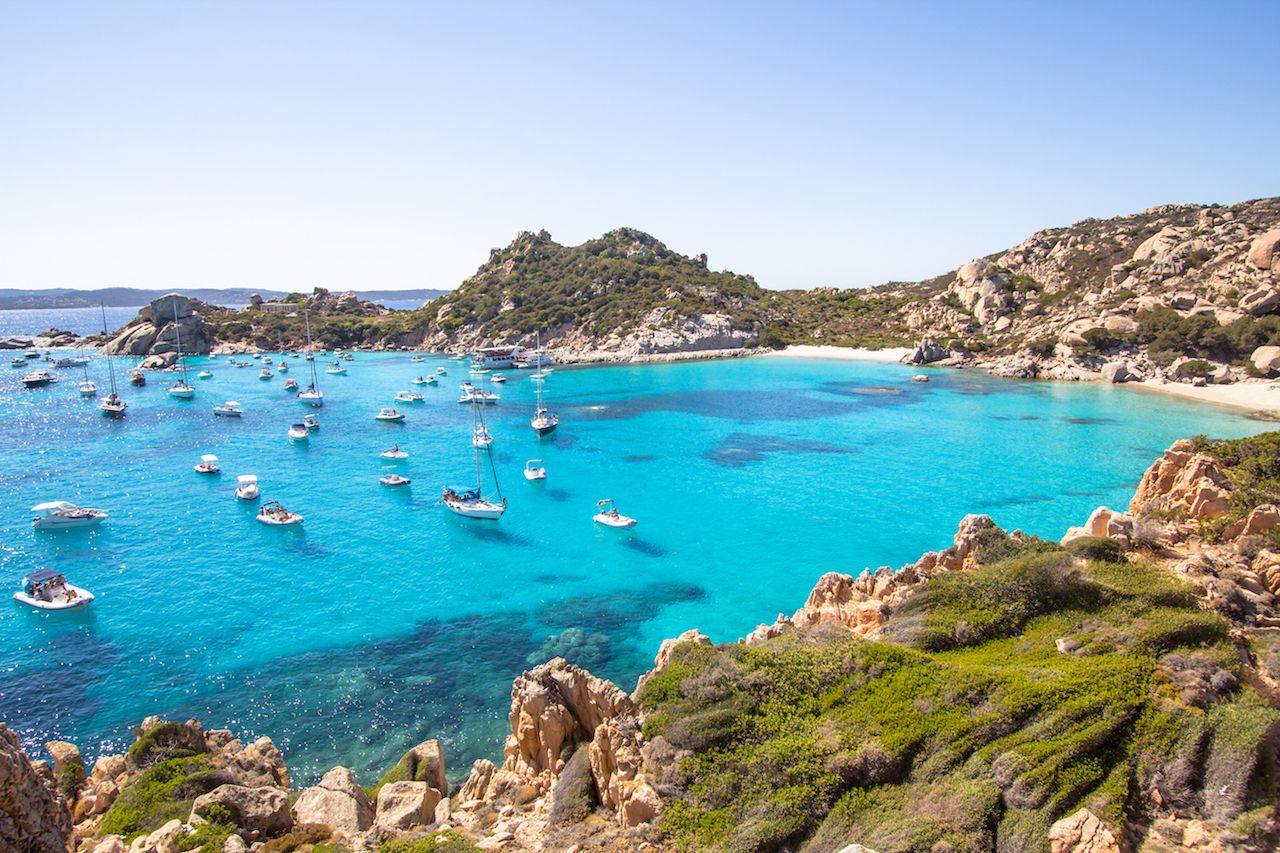
The seven Maddalena Islands lie just off the northeastern corner of Sardinia. With the exception of the eponymous island, Maddalena, most of them feel rugged and remote, with quiet coves overlooking turquoise waters, and hardly a soul in sight. One reason the islands are still relatively uncrowded is that the U.S. Navy maintained a presence here until a decade ago. Back then, with NATO support and the influx of U.S. dollars, the islands didn’t need to market themselves to tourists. But the Maddalenas are now open to visitors.
The main island of La Maddalena, where nearly all of the archipelago’s residents live, is a lively town with shops, cafes, and a vibrant nightlife. The other islands are quiet. A two-minute trip across a bridge from Maddalena takes you to Caprera, which has a small village with two museums and not much else. Boats take you to the other islands, such as Spargi and Budelli. Budelli is famous for its Spiaggia Rosa, a beach with sand tinged pink by the local marine life. The small islands of Razzolli, Santo Stefano, and Cala Santa Maria round out the Maddalena archipelago.
Capraia
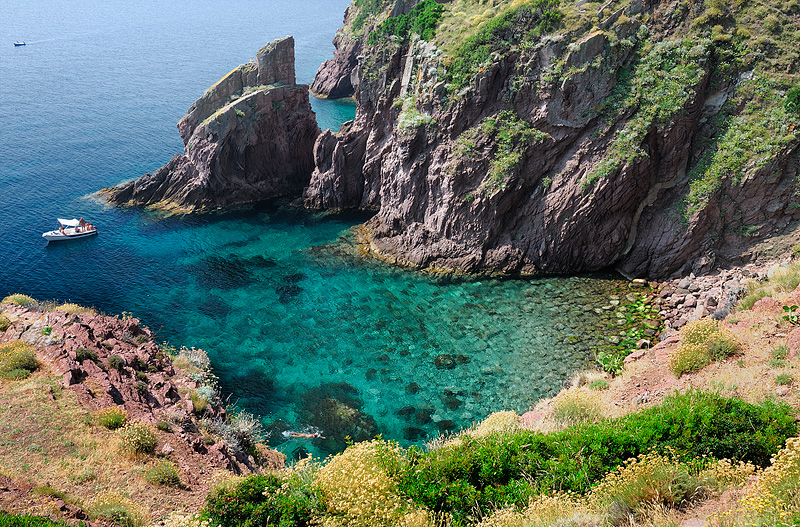
Capraia has only 300 full-time residents, and most of the five-mile-long island is, in fact, a protected national park. Its only paved road is a half-mile stretch connecting its two only towns, known as the port and the village.
Unlike other Italian islands, where the focus is on beach activities like relaxing, swimming, and snorkeling, many visitors to Capraia come to hike. You can hike along short coastal trails and take a dip in the sea, or head to Capraia’s watchtowers, which were built in the Middle Ages to protect against invading pirates. A popular hike is the trek to the Zenobito Tower at the uninhabited southern tip of the island.
Follow our travels on social media!!!