Everything suggests that the Vikings died out around the year 1100 AD. We still wonder how such a small people could have gone so far and left such a profound mark on history.
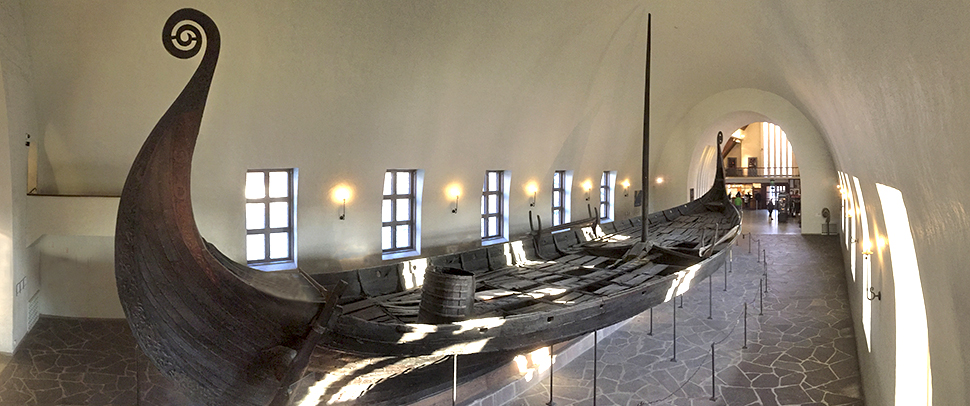
Norway’s capital lies off the official Viking route, but it is where you can visit the best-preserved shipwrecks (drakkars) in the world. The ships on display at the Drakkar Museum in Oslo are over eleven centuries old and were found underground, as Viking nobles were buried alongside their servants, weapons, and jewelry, among other items. The museum is located on the Bygdøy peninsula.
The Landscapes of Vestfold
This region was the true Viking land. In fact, two of its towns were the first Norwegian settlements: Tonsberg, which still exists, and Kaupang, which has since disappeared. This is evidenced by the archaeological remains found in this area. Many of the longships were found in Vestfold.
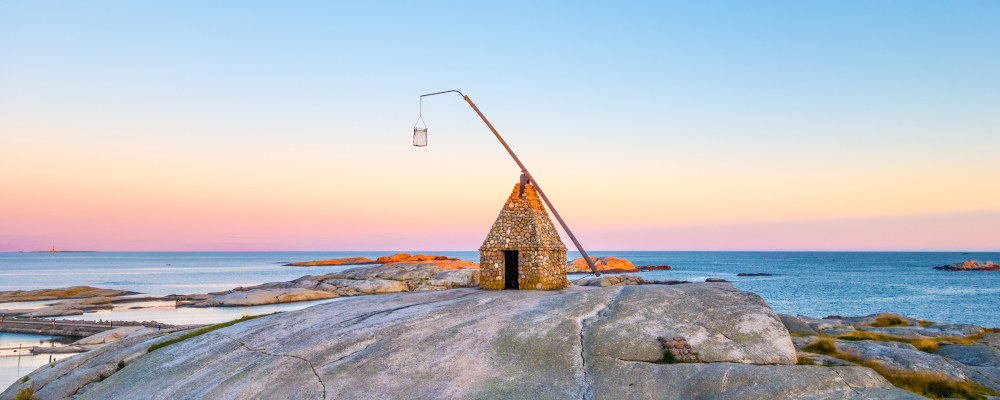
These lands of Vestfold were where any warrior wished to be buried to reach ‘Valhalla,’ the Viking heaven. It is full of ancient sites that mark Norway’s Viking route. It can be easily explored by road. Sometimes they are complemented by an interpretive center, as is the case with the Midgard burial complex.
These are enormous burial mounds covered with stones, earth, and grass, where several chieftains were once buried. The nine main tombs at the Borre cemetery were built between 600 and 900 AD. In fact, this cemetery is the largest collection of monumental burial sites in all of Northern Europe. It’s one of a kind!
An authentic Viking house
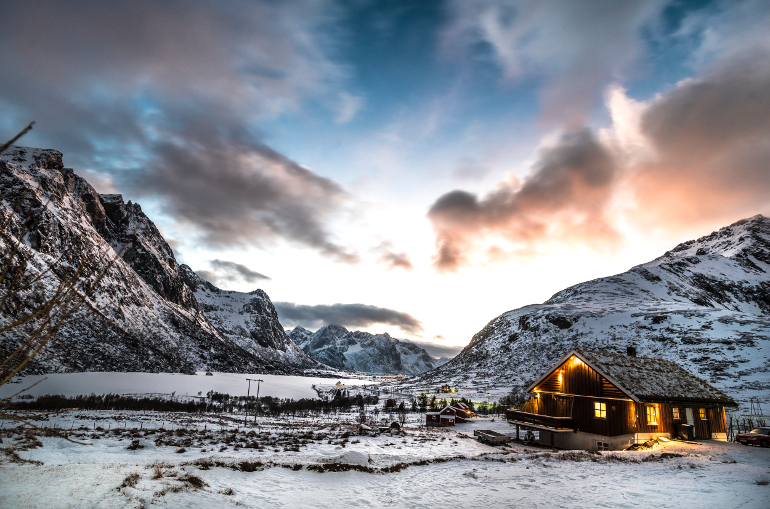
At the top of a hill, very close to the village of Borg, in the Lofoten Islands—up the northern coast of Norway—lies one of the most fascinating traces of Viking life and culture: the Viking Museum (Lofotr Vikingmuseum), built after the remains of a house from the year 500 AD were discovered. It has now been restored and renovated to look as it must have in its time.
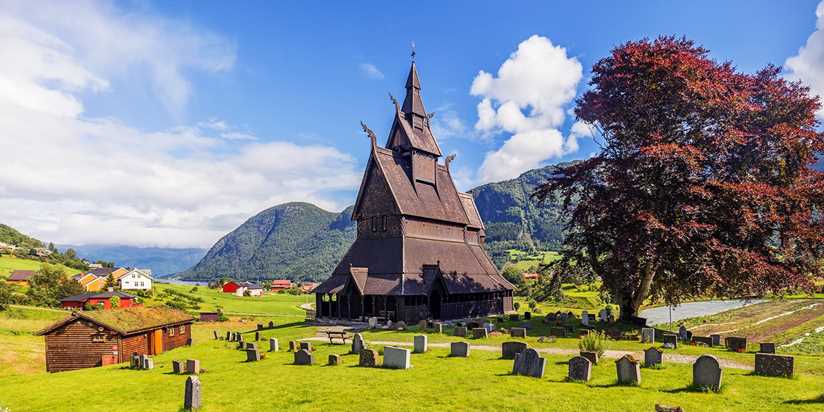
Anyone who wants to feel like a true Viking has a great opportunity: every July, hundreds of people gather in the small village of Gudvangen, on the shores of the Nærøyfjord (a UNESCO World Heritage Site), to travel back 800 years and recreate life as it was in that era. There, a Viking village has been recreated to scale, where people wear authentic costumes, demonstrate how traditional crafts, food, clothing, and utensils are made, and organize trips on drakkars.
Follow our travels on social media!!!